Starting a conversation with someone new can feel difficult because neither person knows what the other will find interesting. Questions about work, weather, or weekend plans may help break the silence, but they do not always give the conversation enough personality to develop.
One surprisingly effective solution may already be sitting nearby.
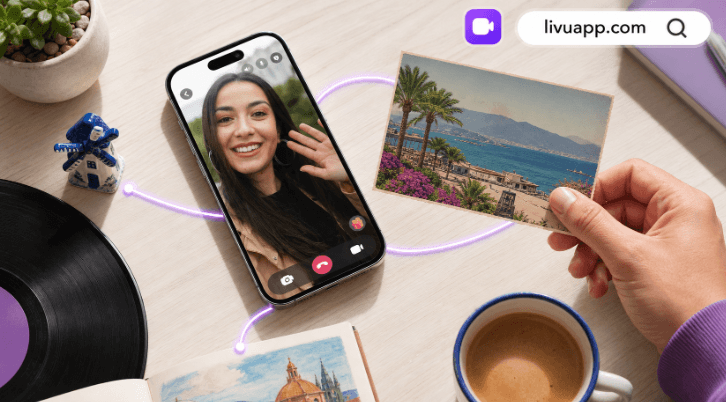
A postcard, book, coffee mug, musical instrument, souvenir, or piece of artwork can become a natural conversation starter. Unlike a prepared list of questions, a physical object gives both participants something specific to see, describe, and respond to.
In video chat, the environment is not merely a background. Used thoughtfully, it can become part of the conversation.
Why Objects Make Good Conversation Starters
Broad questions can require a surprising amount of mental effort. When someone asks, “Tell me something interesting about yourself,” the possibilities are so wide that choosing an answer may be difficult.
An object narrows the subject.
A travel postcard can lead to a story about a memorable trip. A cookbook may introduce a family recipe. A concert ticket can start a discussion about music, while an unusual coffee cup might have a funny story behind it.
People trying 1vs1 chat can use these visible details to move beyond generic introductions. Instead of searching for the perfect question, one participant can simply ask, “What is the story behind that?”
The object gives the speaker a clear starting point and gives the listener several details that can lead to follow-up questions.
Choose Something With a Story, Not Just Something Expensive
An effective conversation object does not need to be rare, impressive, or valuable. In fact, ordinary objects often produce better stories because they connect to everyday experiences.
A slightly damaged book may have traveled through several homes. A simple keyring could come from a first solo trip. A handwritten recipe card may have been passed through a family. Even a plant can create a conversation about gardening attempts, moving into a new apartment, or learning to care for something consistently.
The value comes from the meaning attached to the item.
Choosing an object only to impress the other participant can make the exchange feel performative. Choosing something that genuinely carries a memory makes it easier to speak naturally.
Before starting a conversation, users can look around and identify one item that answers at least one of these questions:
- Where did it come from?
- Why did I keep it?
- What memory does it bring back?
- Did someone give it to me?
- Did it change one of my interests?
- Is there something unusual about how I use it?
If the object produces a clear answer, it can probably support a good conversation.
Let the Object Appear Naturally
Holding an item in front of the camera immediately after saying hello may feel abrupt. It is usually better to allow the object to enter the conversation naturally.
For example, if someone asks about travel, a participant might say, “I have a postcard from my favorite trip nearby,” before showing it. During a discussion about music, they could pick up a record or instrument that relates to the topic.
On a live chat video 1v1, this visual element can add variety without interrupting the face-to-face interaction. The object briefly becomes a shared point of attention, after which the participants can return to looking at each other.
The transition works because it follows the existing topic. The item supports the conversation rather than replacing it.
Use “Show and Ask,” Not “Show and Tell”
Traditional show-and-tell focuses on one person presenting while the other listens. A good video conversation should be more balanced.
After sharing an object and its story, invite the other participant to respond. They may have a similar item, a related memory, or a completely different perspective.
Useful prompts include:
- Do you have anything that reminds you of a particular trip?
- Is there an object you have kept for a surprisingly long time?
- What is something in your room that has a story behind it?
- Has anyone ever given you a gift that changed one of your interests?
- What everyday item would be difficult for you to replace?
These questions transform a personal story into a shared exchange.
The other participant should never feel pressured to show their room or belongings. They can respond verbally, describe an item that is not nearby, or move to another subject. The purpose is to create possibilities, not obligations.
Five Types of Objects That Often Lead to Good Stories
1. Travel reminders
Postcards, maps, magnets, tickets, and small souvenirs can introduce places without turning the conversation into a list of destinations.
The best story may not be about the location itself. It could involve missing a train, trying an unfamiliar food, getting caught in unexpected weather, or receiving help from a stranger.
2. Books and creative work
A visible book can lead to discussions about characters, ideas, or reading habits. Sketchbooks, craft projects, photographs, and musical instruments can serve a similar purpose.
Instead of asking only whether the other person likes the object, ask what it reminds them of or whether they have tried something similar.
3. Food and drink
A distinctive snack, tea, coffee, or homemade dish can introduce traditions and daily routines. These subjects are accessible because everyone has food preferences, even when their experiences differ.
Keep the discussion conversational rather than presenting one culture or habit as strange. Curiosity works best when it is expressed respectfully.
4. Gifts and inherited items
Objects received from friends or relatives often carry stories about relationships, celebrations, and meaningful moments.
Participants should share only what feels comfortable. A story can remain light, and no one needs to explain private family circumstances.
5. Everyday objects with unexpected uses
Sometimes the most entertaining subject is an ordinary item used in an unusual way. A mug might hold paintbrushes, a suitcase may serve as a side table, or a kitchen timer could support a study routine.
These small details reveal personality without requiring anyone to share highly personal information.
Turn One Story Into Several Topics
A good object can create more than one conversational path.
Imagine someone shows a vinyl record purchased at a secondhand market. The discussion could move toward favorite musicians, collecting habits, memorable shopping discoveries, live concerts, changing music formats, or the city where the market was located.
The listener does not need to explore every possibility. They can choose the detail that seems to carry the most energy.
This is particularly useful in a 1vs1 chat because the conversation does not need to compete with several participants introducing separate topics. Both people can remain with one story long enough to discover where it leads.
Keep Privacy Outside the Frame
Using objects in a video conversation requires some awareness of what the camera can reveal.
Before showing a postcard, envelope, ticket, or document, check whether it displays a full name, address, booking number, account information, workplace, or other identifying detail. Photographs may also include people who did not agree to appear on camera.
Reflective surfaces deserve attention as well. Mirrors, windows, and glossy objects can reveal parts of a room that are outside the intended frame.
Users can cover sensitive information, hold the object at a safer angle, or describe it without showing it. A good story does not require exposing private details.
Do Not Turn the Conversation Into a Performance
Once people discover that objects can generate topics, they may be tempted to prepare an entire collection. That can make the conversation feel like a presentation.
One item is usually enough.
The goal is to create an opening and then allow the interaction to develop. If the other participant becomes interested in a different subject, follow the new direction rather than repeatedly returning to the prepared object.
A live chat video 1v1 feels most natural when both participants influence its direction. The object should open a door, not determine the entire route.
How LivU Supports Visual Conversation
LivU is built around real-time video chat, instant matching, and social discovery. Because participants can see and respond to each other directly, visual details can become part of the exchange in ways that are not possible in text alone.
A smile, gesture, object, or change of expression may introduce a topic before either person has formulated a question. That gives users more conversational material while preserving the spontaneity of meeting someone new.
The platform also offers features such as filters, translation support, virtual gifts, and different matching options. These tools can support the experience, but the most interesting part of a conversation often comes from the individual stories users choose to share.
See also: Why Some Patients Develop Cavities Despite Brushing Regularly
Final Thoughts
Interesting conversations do not always begin with clever questions. Sometimes they begin with a simple object and the sentence, “There is a story behind this.”
Look around before the next video chat. A postcard may hold a travel memory. A book could introduce an unexpected idea. A cup, record, plant, or souvenir might reveal something more personal than a standard introduction.
The object itself is only the starting point. What matters is the story it unlocks—and the new stories it invites from the person on the other side of the screen.